
 Français
 English
 Italiano



Impact of soiling on electricity production: how much does a dirty panel really cost?
Whether for self-consumption or full resale, individuals, professionals, and local authorities are increasingly choosing solar photovoltaic energy. Clean and renewable, it is also very attractive from an economic standpoint. However, to ensure optimal performance, it is essential that the solar plant's panels are properly maintained.
Why clean photovoltaic panels?
Photovoltaic panels, which convert sunlight into electricity, are necessarily installed outdoors. Over time and due to weather conditions, their surface becomes covered with dust, pollen, plant debris (leaves, etc.), lichen, fine particles, bird droppings, etc. Near the coast, salt spray and sand may be added to this list, and in agricultural areas, spraying products may also be present. Rain or wind alone is not enough to remove these residues effectively. This dirt clogs the surface of the panels and negatively affects the plant’s output. Indeed, it creates a barrier, of varying thickness, between sunlight and the photovoltaic cells. Moreover, poor maintenance affects not only the plant’s performance but also the longevity of the panels.
Significant efficiency losses
Poorly maintained solar panels can become a real financial sinkhole. According to EDF (https://www.edf-solutions-solaires.com/guide-solaire), the layer of dirt covering them can cause a production drop of up to 15%. The Levelized Cost of Energy (LCOE) may also rise when panels are not cleaned. Depending on the size of the solar plant, this deficit can quickly amount to tens of thousands of euros per year. Cleaning solar panels is therefore a crucial issue for photovoltaic plant owners.
Some companies offer soiling loss assessments. You can also compare your performance using energy production data before and after cleaning to evaluate its effectiveness.
When to clean a solar plant’s panels?
The maintenance frequency depends on several factors, including the plant’s exposure and panel tilt (on flat roofs, dirt is harder to evacuate). It is generally recommended to clean the panels at least twice a year: after spring, to remove pollen and winter debris and prepare for the high sunlight period, and after autumn, particularly to remove fallen leaves. In winter, accumulated snow must also be cleared. However, any increase in your grid consumption or drop in productivity should prompt you to check the cleanliness of your photovoltaic panels.
Precautions before cleaning solar panels
Before performing maintenance, it is important to turn off the power supply (photovoltaic panel breaker, inverter, and DC isolator set to off). As a precaution, check for the absence of voltage. Be aware that cleaning an elevated installation requires proper training and safety equipment. Climbing onto a roof without these precautions is dangerous.
How to clean photovoltaic panels?
Owners of solar plants and maintenance companies today can choose between:
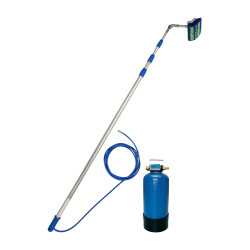
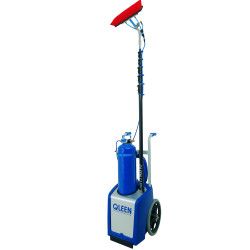
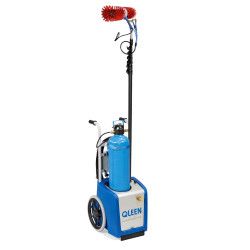
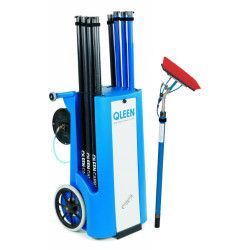
• Telescopic cleaning poles equipped with a rotating brush and connected to a water supply.
• Cleaning robots, especially used for large surfaces,
• Drone-based cleaning.
Aggressive chemical products should be avoided whenever possible as they can damage the photovoltaic cells of solar panels. However, pure water cleaning is a modern and highly recommended method. It uses demineralized, filtered water that is free of chemicals and impurities. Combined with the mechanical action of a quality brush, it achieves a spotless result with no streaks, as its composition prevents the formation of limescale residues.
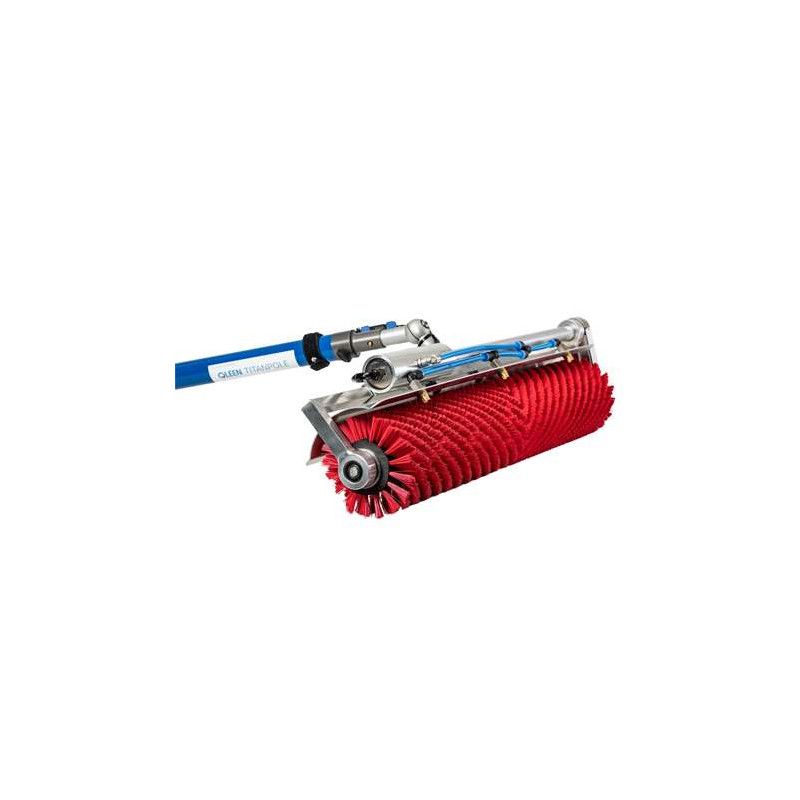
The Vario rotating brush by Qleen, a cleaning equipment expert, can cover up to 250m² per hour. This high-quality tool, easy to use and extremely durable, is available in 50, 75, and 100 cm formats to fit any plant. It features two powerful motors with automatic cooling systems built into the brush head, as well as a patented joint for precise and easy handling. Finally, its innovative and smart design ensures both operator comfort throughout the cleaning process, even on long jobs, and impeccable results.
Our team is here to answer your questions and recommend the equipment best suited to your needs. Feel free to contact us!
-
 Standards and regulations governing the cleaning of solar panels
With the growth in renewable energy installations, cleaning solar panels is essential to ensure their performance and...Read more
Standards and regulations governing the cleaning of solar panels
With the growth in renewable energy installations, cleaning solar panels is essential to ensure their performance and...Read more -
 Why choose pure water cleaning?
Cleaning with Pure Water is an innovative, ecological and economical method that optimises the efficiency of solar...Read more
Why choose pure water cleaning?
Cleaning with Pure Water is an innovative, ecological and economical method that optimises the efficiency of solar...Read more -
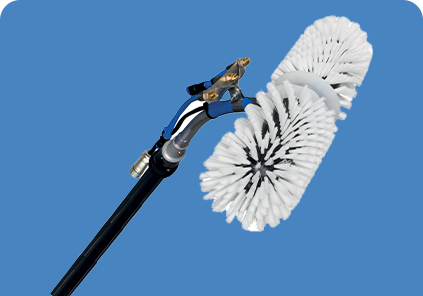 Robot vs rotating brush, which is the best solution for cleaning solar panels?
To maintain optimum energy yield from a solar panel, it needs to be cleaned regularly. This maintenance removes the...Read more
Robot vs rotating brush, which is the best solution for cleaning solar panels?
To maintain optimum energy yield from a solar panel, it needs to be cleaned regularly. This maintenance removes the...Read more -
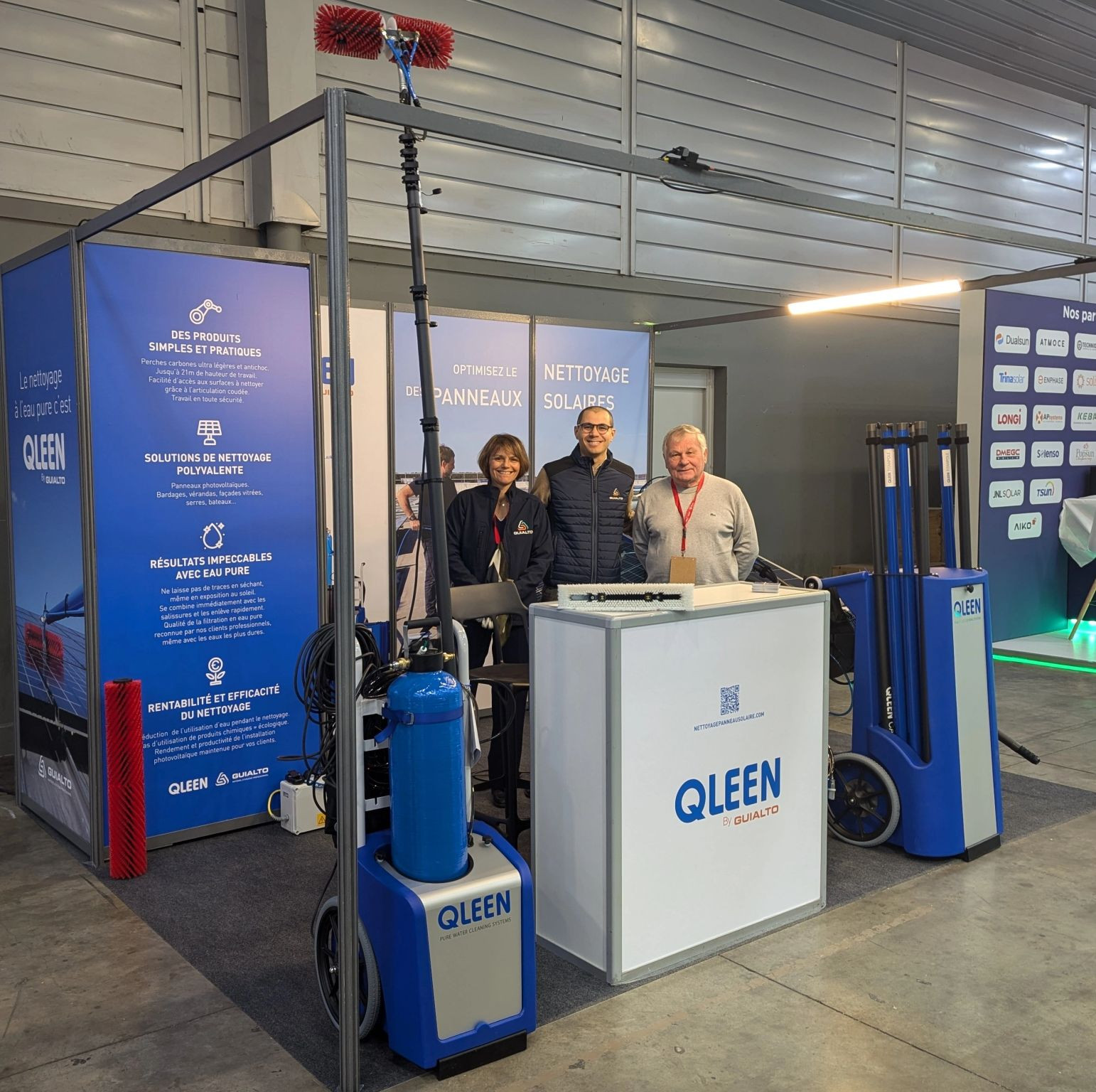 Qleen at Energaia
Many companies specialising in the cleaning and maintenance of solar panels have discovered Qleen equipment. Robust,...Read more
Qleen at Energaia
Many companies specialising in the cleaning and maintenance of solar panels have discovered Qleen equipment. Robust,...Read more -
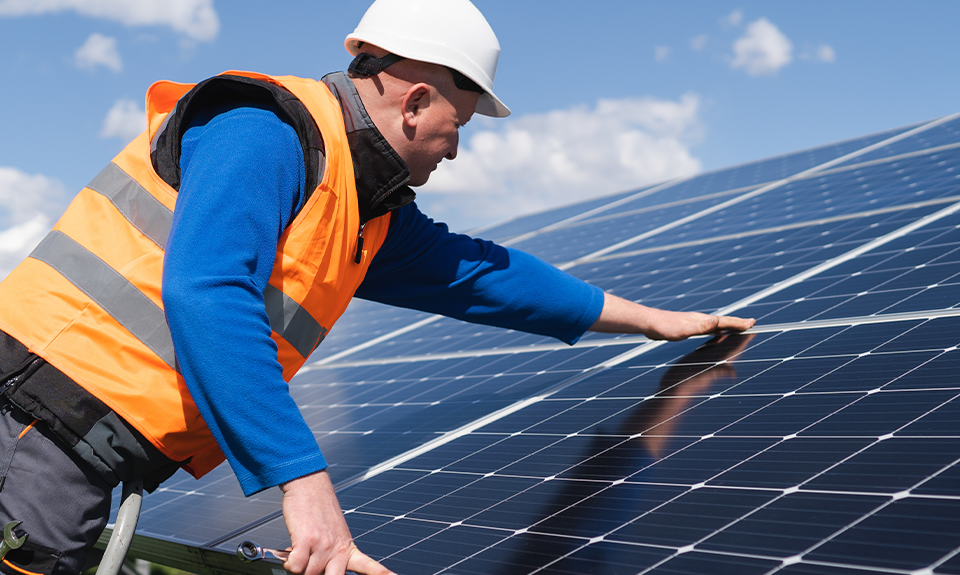 Optimise your solar panel cleaning service: choose the right equipment for your needs
Cleaning solar panels is essential to guaranteeing their efficiency and maximising their energy output. Over time,...Read more
Optimise your solar panel cleaning service: choose the right equipment for your needs
Cleaning solar panels is essential to guaranteeing their efficiency and maximising their energy output. Over time,...Read more