
 Français
 English
 Italiano




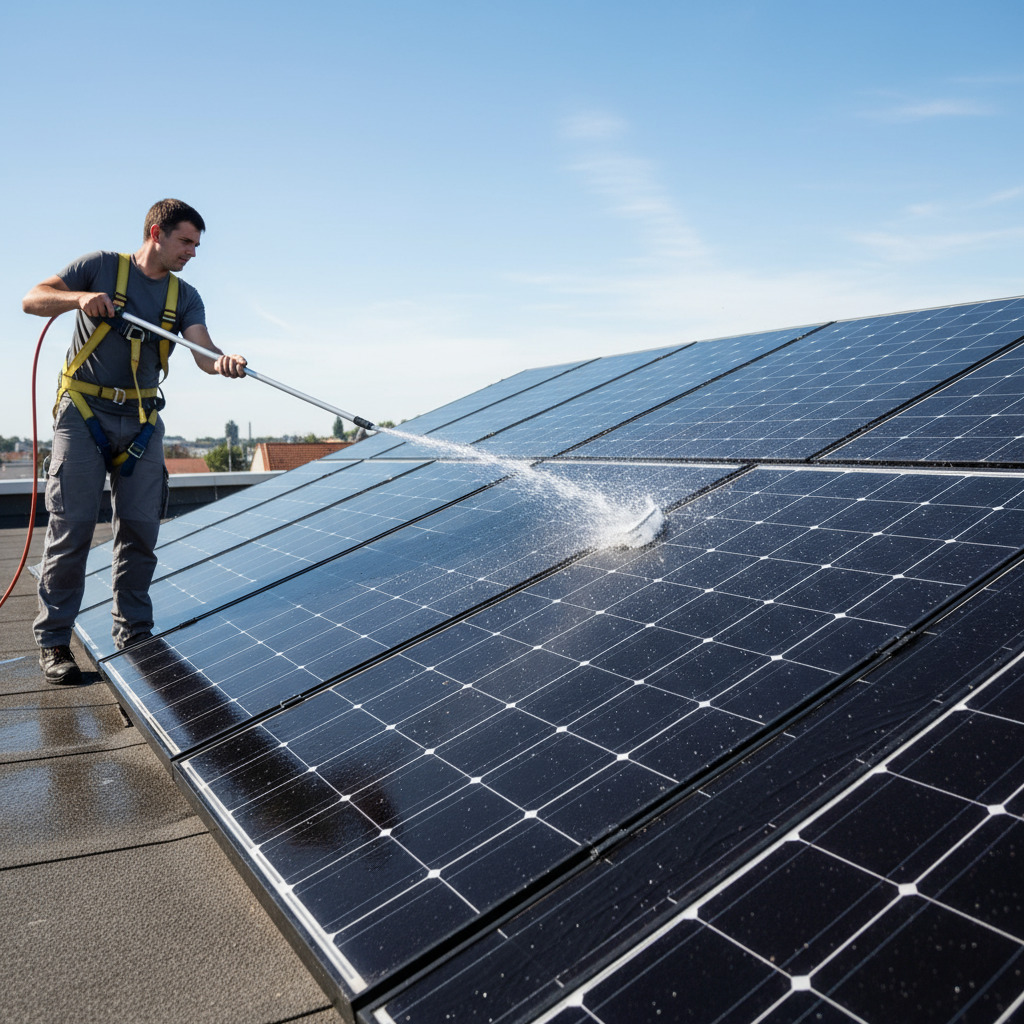
Cleaning solar panels: what kind of water should you use?
Whether for financial, regulatory, or eco-friendly reasons, more and more individuals, professionals, and communities are investing in solar energy. All of them must keep in mind that, for optimal performance, proper maintenance of photovoltaic panels is essential. Indeed, it is the energy from solar radiation that the panels' cells convert into electricity. A dirty panel receives less sunlight, and therefore produces less. But how can you clean them without damaging them? For example, what water should you use?
Tap Water, Rainwater, Well Water, or Pure Water: What to Choose for Your Photovoltaic Panels?
Tap Water
This is the first water source that comes to mind and is the easiest to access. Its pressure is also suitable for cleaning solar panels. Unfortunately, it has its downsides. It contains calcium, which can leave traces on the surface of your panels, depending on the quality of your water. Specifically, it forms a white film that reflects the sun's rays. And as you might have guessed, this is the opposite of what we want!
How to effectively clean your solar panels: demineralized water or detergent?
Rainwater
Soft, free of calcium, and free of charge, it has everything going for it. However, it does require the installation of a collection system and must be filtered before use. Be careful not to rely solely on rain episodes to clean your panels: manual maintenance (brush, cloth, etc.) is still necessary.
Water from a Tank, Well, or Pond
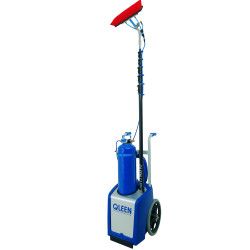
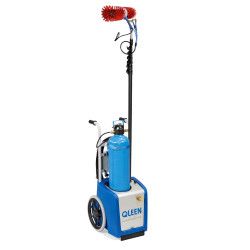
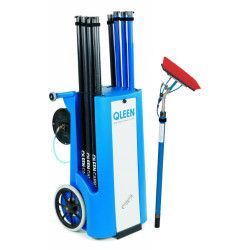
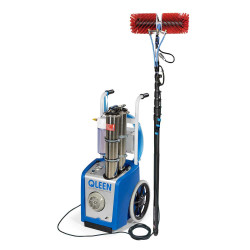
Useful in rural areas, this technique allows easy access to water. Some Qleen machines can pump water directly from a well or tank. However, this approach requires setting up a filtration system to eliminate impurities and residues, preventing damage to the filtration machine. All Qleen machines are equipped with a filter to avoid such incidents.
Pure Water
Why choose pure water cleaning? This is water that has been demineralized through filtration, making it free of both chemicals and impurities. Its composition limits the formation of calcium residues, making it ideal for cleaning solar panels. As we saw earlier, calcium forms a white veil that reflects sunlight and reduces energy production. Pure water is easily obtained through an innovative process: resins and filters for making pure water.
When used with a high-quality brush, it guarantees flawless results. It is also commonly used for cleaning conservatories and other glass surfaces.
| Type of Water | Advantages | Disadvantages | Recommended Use |
|---|---|---|---|
| Tap Water | Easy access, available pressure | Calcium and minerals ⇒ traces/whitening, reduced efficiency | Avoid on PV panels; if used, rinse with pure water to finish |
| Rainwater | Soft, free, low mineral content | Requires storage + filtration; variable availability | OK with fine pre-filtration; ideally finish with pure water rinse |
| Water from Tank / Well / Pond | Local resource, almost no cost | Impurities ⇒ scratches and deposits; pumping & filtration required | Only with multi-stage filtration and then rinse with pure water |
| Pure Water (Demineralized / Osmosed) | No traces, no calcium; perfect finish | Requires a production system (resins/RO) | Recommended for washing and final rinsing of solar panels |
Best Practices for Effective and Safe Cleaning
Check Temperature and Sun Exposure
It's not enough to just get motivated to wash your solar panels. You also need to ensure the optimal conditions for this task. For example, intense sunlight and high temperatures can affect the outcome of your cleaning: traces will almost certainly appear, and the thermal shock between the temperature of the water and that of the panels could damage your equipment. The best time to clean is in the morning or late afternoon, and it's ideal to use lukewarm water.
Use the Right Pressure if Using Equipment
The water pressure from the brush is crucial. Too low, and it will limit the effectiveness of your cleaning. Too high (such as a high-pressure washer), and it could damage your solar panels. A pressure range of 3 to 5 bars is ideal for cleaning glass surfaces such as photovoltaic panels.
Use the Right Equipment
For maintaining your solar panels, there are various options: robots or drones, for example, are highly effective but expensive and require programming. Alternatively, soft brushes with telescopic handles are easy to use and ensure the safety of the operator, as they stay on the ground.
Qleen, an expert in cleaning equipment manufacturing, offers the Vario rotating brush. Highly effective, particularly durable, and available in different sizes, it allows you to clean up to 250m² in one hour.
Common Mistakes to Avoid When Cleaning Solar Panels
-
Using hard water, which leaves a reflective film on the surface of solar panels.
-
Using chemical products, which can damage your panels.
-
Cleaning in direct sunlight, which will generate traces and may cause thermal shock.
Why Pure Water Optimizes the Efficiency of Your Solar Panels
Cleaning your solar panels not only ensures their longevity but is also a key factor in maximizing productivity. The choice of water, which may seem trivial, is very important. It is now clear that pure water has proven its effectiveness in achieving optimal results. Now it's up to you! Find resins and filters for making pure water.
-
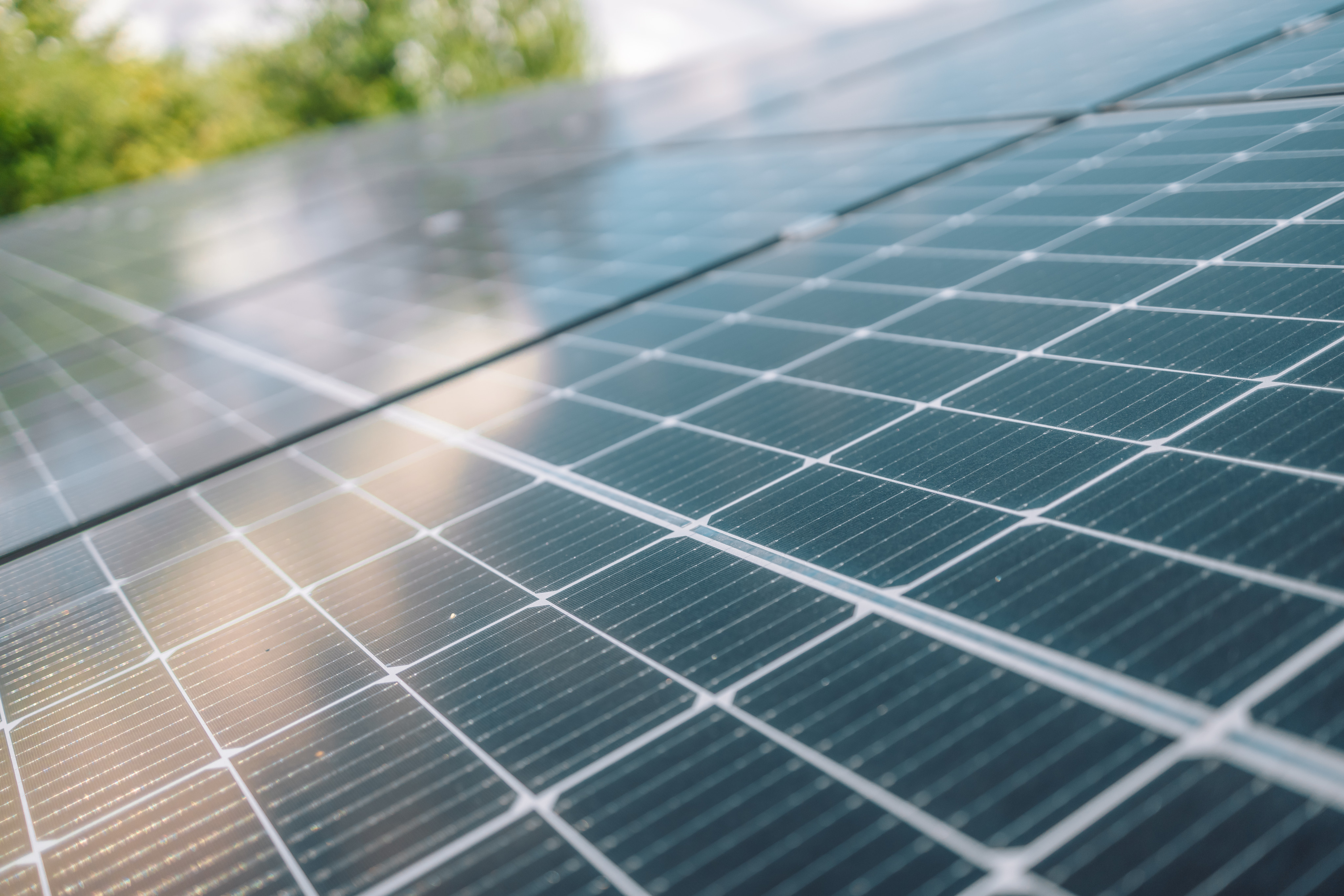 Standards and regulations governing the cleaning of solar panels
With the growth in renewable energy installations, cleaning solar panels is essential to ensure their performance and...Read more
Standards and regulations governing the cleaning of solar panels
With the growth in renewable energy installations, cleaning solar panels is essential to ensure their performance and...Read more -
 Why choose pure water cleaning?
Cleaning with Pure Water is an innovative, ecological and economical method that optimises the efficiency of solar...Read more
Why choose pure water cleaning?
Cleaning with Pure Water is an innovative, ecological and economical method that optimises the efficiency of solar...Read more -
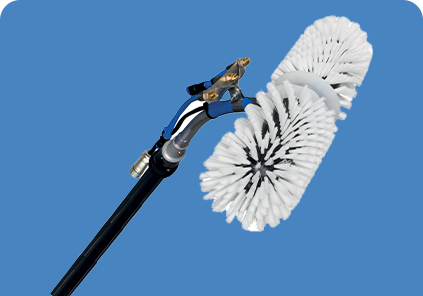 Robot vs rotating brush, which is the best solution for cleaning solar panels?
To maintain optimum energy yield from a solar panel, it needs to be cleaned regularly. This maintenance removes the...Read more
Robot vs rotating brush, which is the best solution for cleaning solar panels?
To maintain optimum energy yield from a solar panel, it needs to be cleaned regularly. This maintenance removes the...Read more -
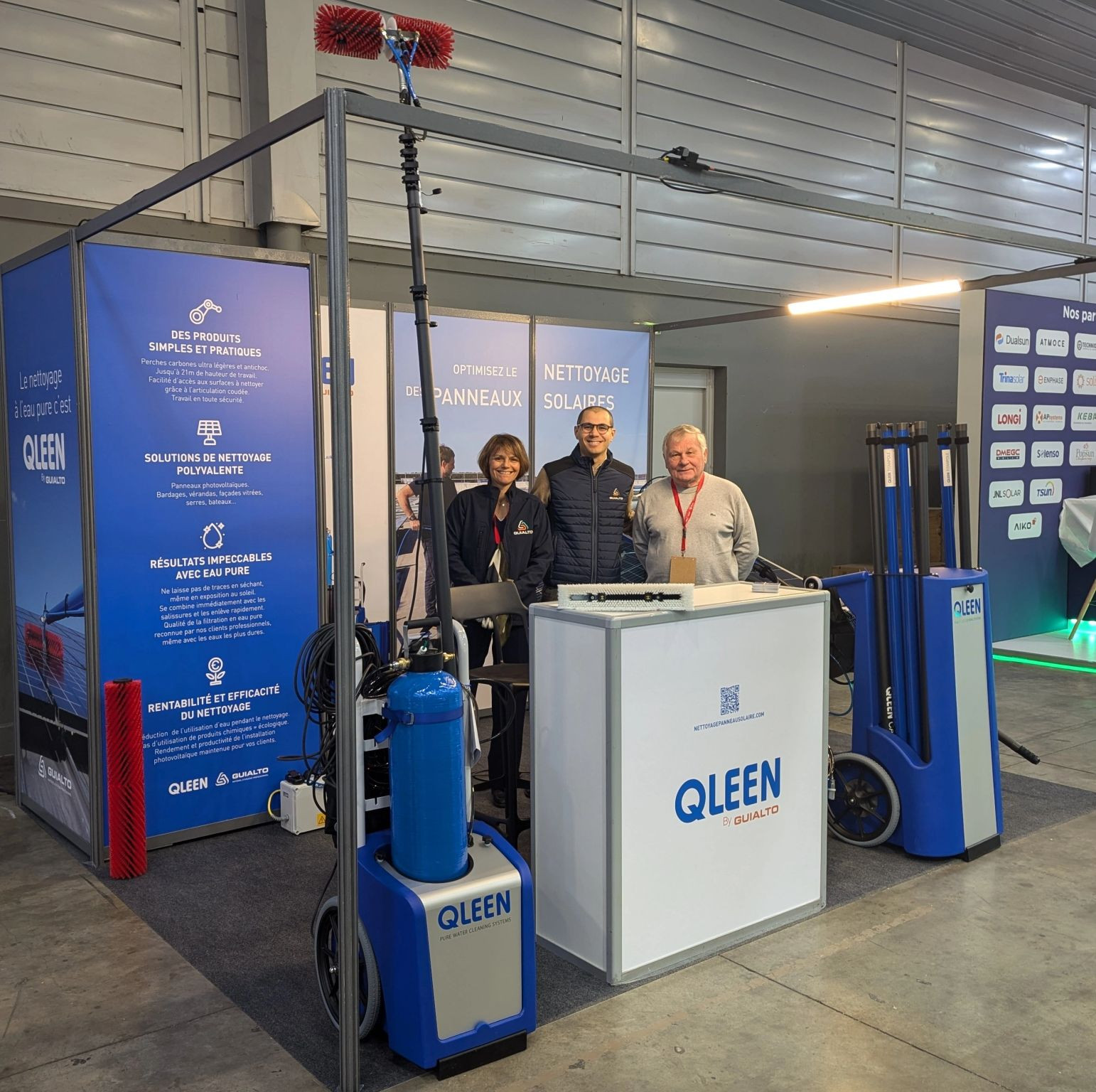 Qleen at Energaia
Many companies specialising in the cleaning and maintenance of solar panels have discovered Qleen equipment. Robust,...Read more
Qleen at Energaia
Many companies specialising in the cleaning and maintenance of solar panels have discovered Qleen equipment. Robust,...Read more -
 Optimise your solar panel cleaning service: choose the right equipment for your needs
Cleaning solar panels is essential to guaranteeing their efficiency and maximising their energy output. Over time,...Read more
Optimise your solar panel cleaning service: choose the right equipment for your needs
Cleaning solar panels is essential to guaranteeing their efficiency and maximising their energy output. Over time,...Read more